

We can provide
- •Interviews with the founders
- •Live product demonstrations
- •Background briefings on AI in fashion retail
- •Data and expert commentary for features
Boilerplate
hypsh is an AI fashion company that turns shopper intent into complete, shoppable outfits.
hypsh is a Berlin-based fashion technology company. Its AI understands what people want to wear and composes full, shoppable outfits from a catalogue, rather than showing rows of items. hypsh runs its own consumer styling platform at hypsh.com and brings the same engine to fashion retailers, from in-store styling to AI-ready product data.
hypsh is a Berlin-based fashion technology company building AI that turns shopper intent into complete, shoppable outfits. While fashion ecommerce is still built around item-led search — serving only shoppers who already know what they want — hypsh lets shoppers describe an occasion, a mood, or a piece they own, and composes a full, personalised look from the catalogue. The company runs its own consumer platform at hypsh.com and brings the same styling engine to fashion retailers, from in-store experiences to AI-ready product data.
Company snapshot
- Company
- hypsh
- Launched
- 2026, Berlin
- Headquarters
- Wöhlertstraße 8, 10115 Berlin, Germany
- Industry
- Fashion AI / Retail Technology
- Product
- Consumer AI styling platform and shoppable outfit builder
- Built for
- Fashion Shoppers (B2C) / Retail Stores (B2B)
- Stage
- Live at hypsh.com
How it works
Read the catalogue properly
Product data is written for filters, not for people: size, colour, material, category. None of that tells you whether two pieces belong together. hypsh enriches each product into something a stylist could reason about — how formal it reads, how it sits, how it behaves next to other garments.
Understand the request, not the keywords
Shoppers rarely arrive with a search term. They arrive with an occasion, a mood, a reference, or a piece they already own — and often with no idea how to describe what they want. hypsh works from that intent, and offers occasions and trends as a way in when the words do not come.
Compose the look as a whole
This is the part that is not search. Finding items that resemble each other is a solved problem; assembling pieces that work together — proportion, colour, formality, coherence — is a different one. hypsh builds the outfit as a single composition rather than stacking up individual recommendations.
Make it personal, and make it explainable
A single photo is enough to tune looks to an individual's colouring and shape. The result is explainable rather than a black box: every look comes with the reasoning behind it — why these pieces, and why together. That is what makes it usable at retail scale.
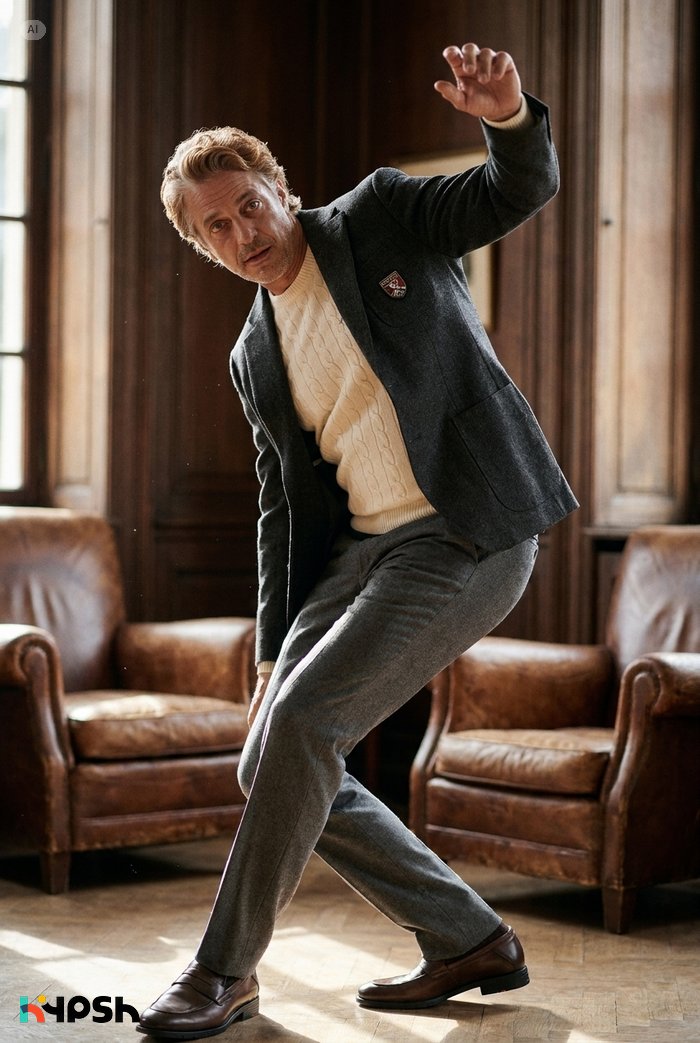
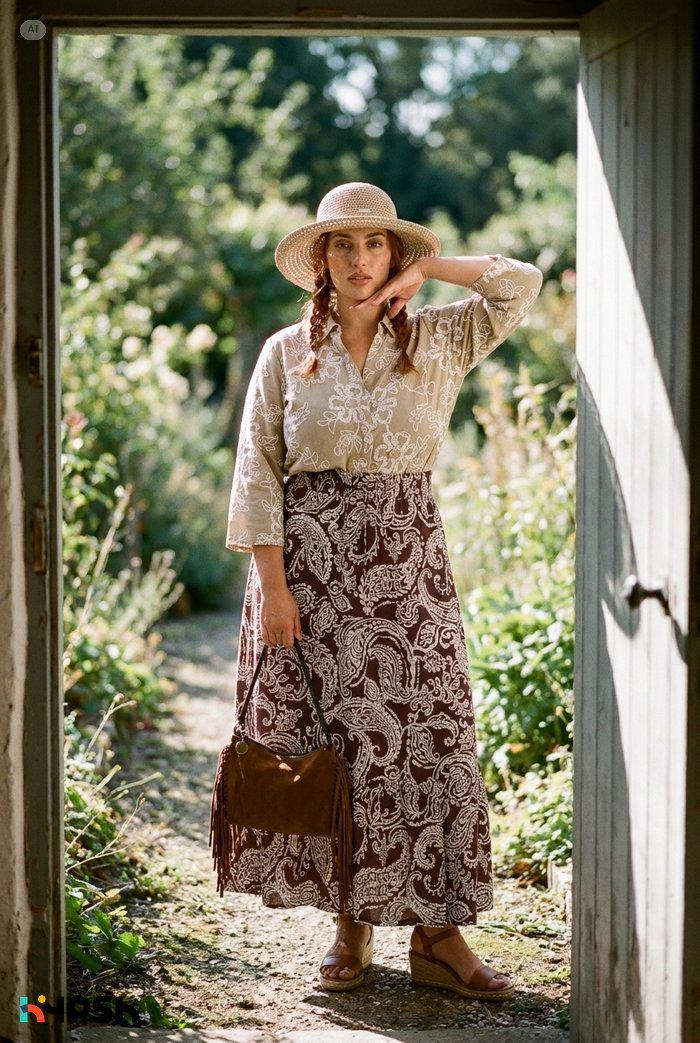
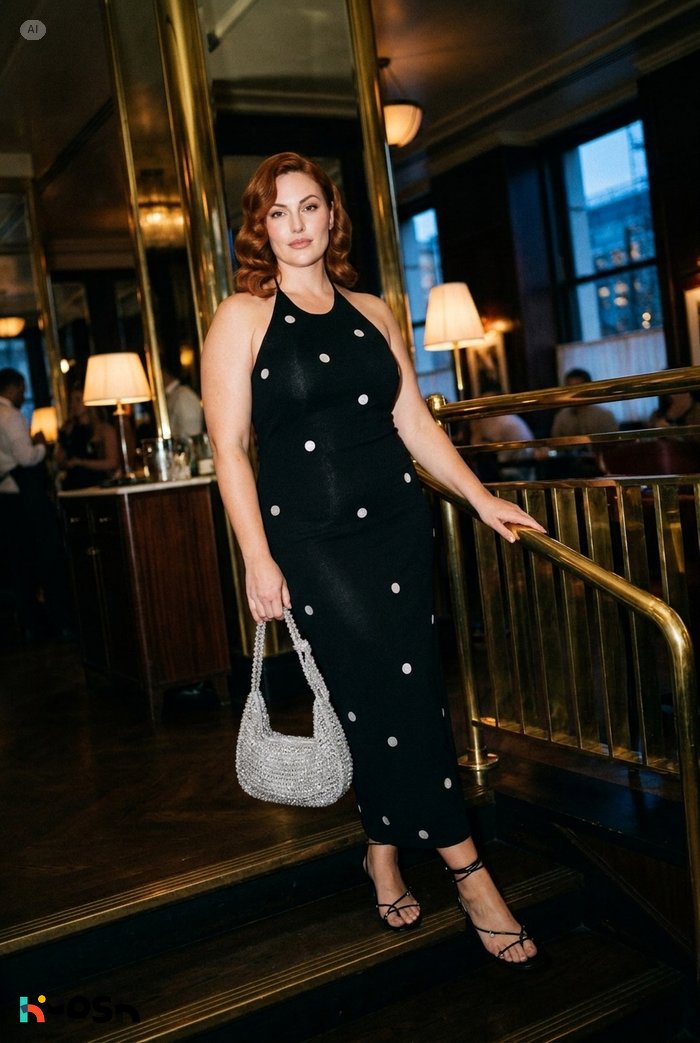
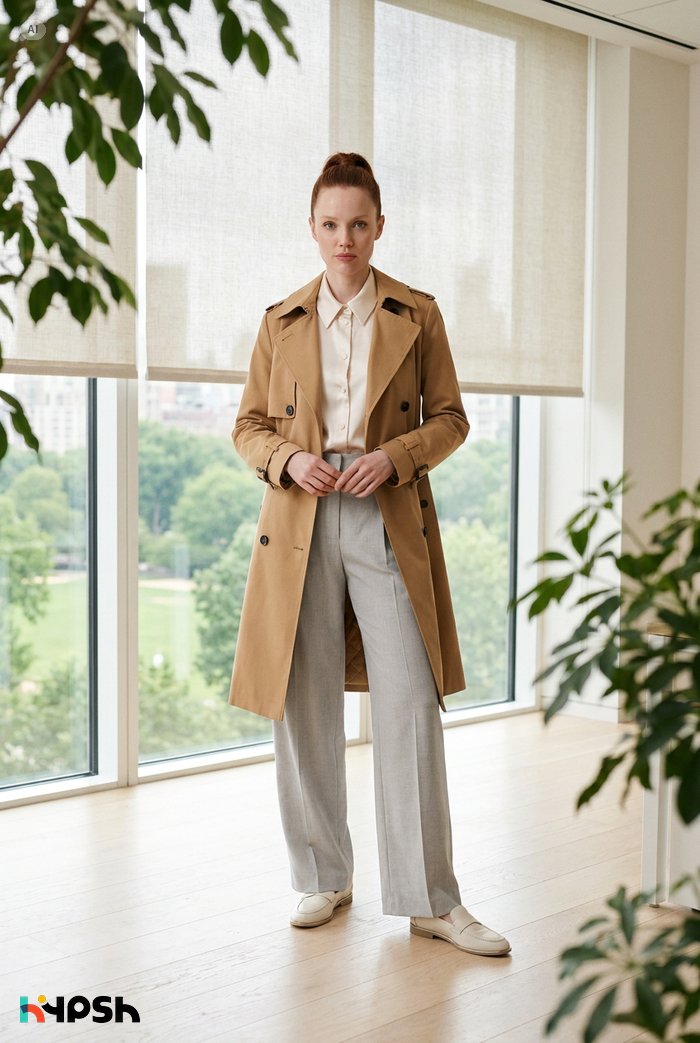
Outfits built by hypsh
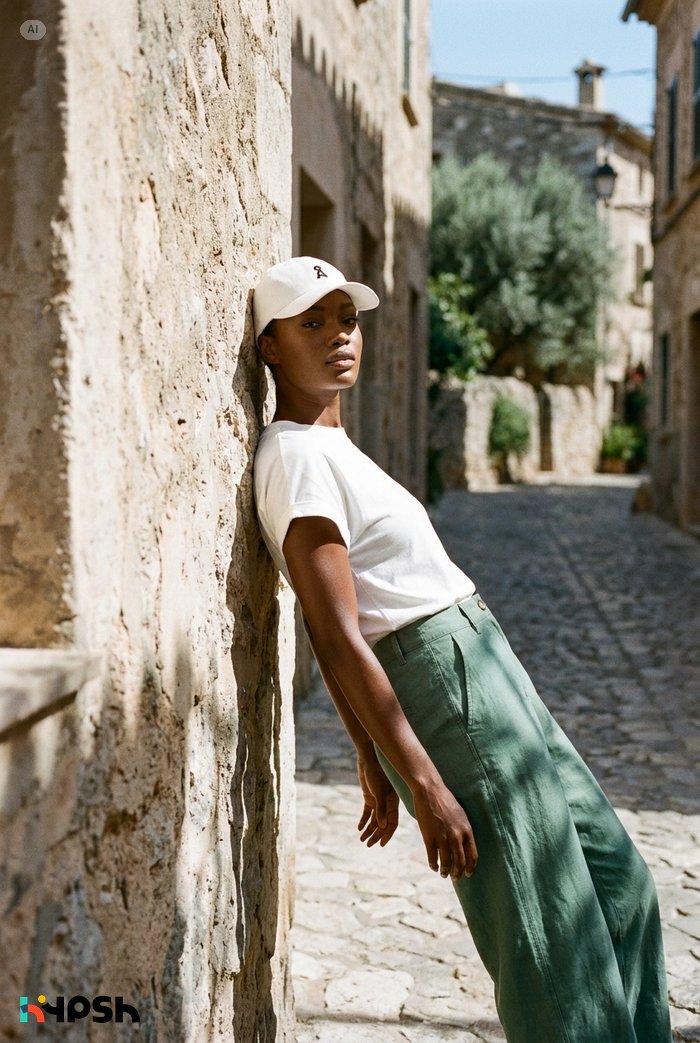
Real outputs, free for editorial use. Models are AI-generated and carry a visible AI marker.



Founders

Benjamin Dageroth
Founder & CEO
LinkedInBenjamin Dageroth is founder and CEO of hypsh. He started the company after noticing that fashion sites are built around keywords, not intentions — a gap he'd encountered when working as a product manager in fashion AI for many years. It's a return, in a way, to where he began: twenty years earlier, his first startup qiss tackled a similar problem: helping people find the right gift when they had no idea where to start.
Available for interviews on

Stephan Pfob
Co-Founder & Managing Director
LinkedInStephan Pfob is co-founder and managing director of hypsh. A philosopher by training, he has spent a decade working on how people and organisations talk to each other, as a communication expert and CEO of Berlin Alley. He is the author of several books, most recently "Starke Gespräche" (Munich, 2025), hosts the podcast "Gut und Gerne" on the psychology of happiness at work, and edits the "Toolbox für gute Arbeit".
Available for interviews on
Quotes
“People do not want to search for clothes, they want to dress for an occasion.”
Styling, Pricing, Privacy
- Browsing and building outfits needs no account and no image.
- Users can upload photos of themselves. From the photo, hypsh analyses colouring (skin, hair), along with body shape and colour typology, and estimates sizes. That profile can also be filled in by hand.
- If a user chooses to keep their photo after the analysis, it stays until they delete it or delete their account. Photos are not used to train or improve any model.
- Virtual try-on images are generated through Google's Vertex AI, under terms that exclude customer data from model training.
- Outfit visualisations that were completed using uploaded photos won't be shared in the feed, for reasons of privacy.
Technology
Press kit
 Social / preview image (JPG)Download
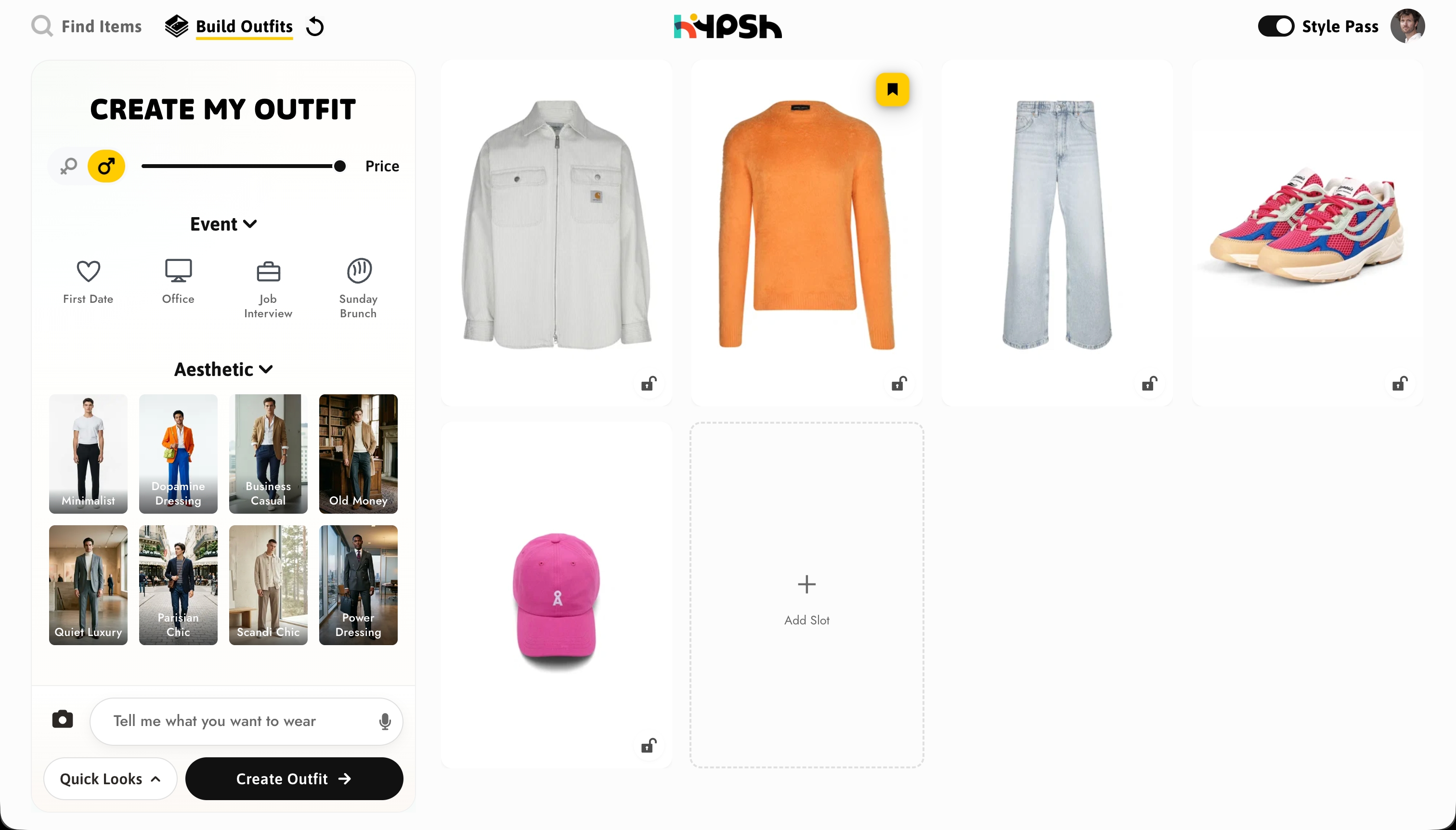 Product screenshot — Outfit BuilderDownload
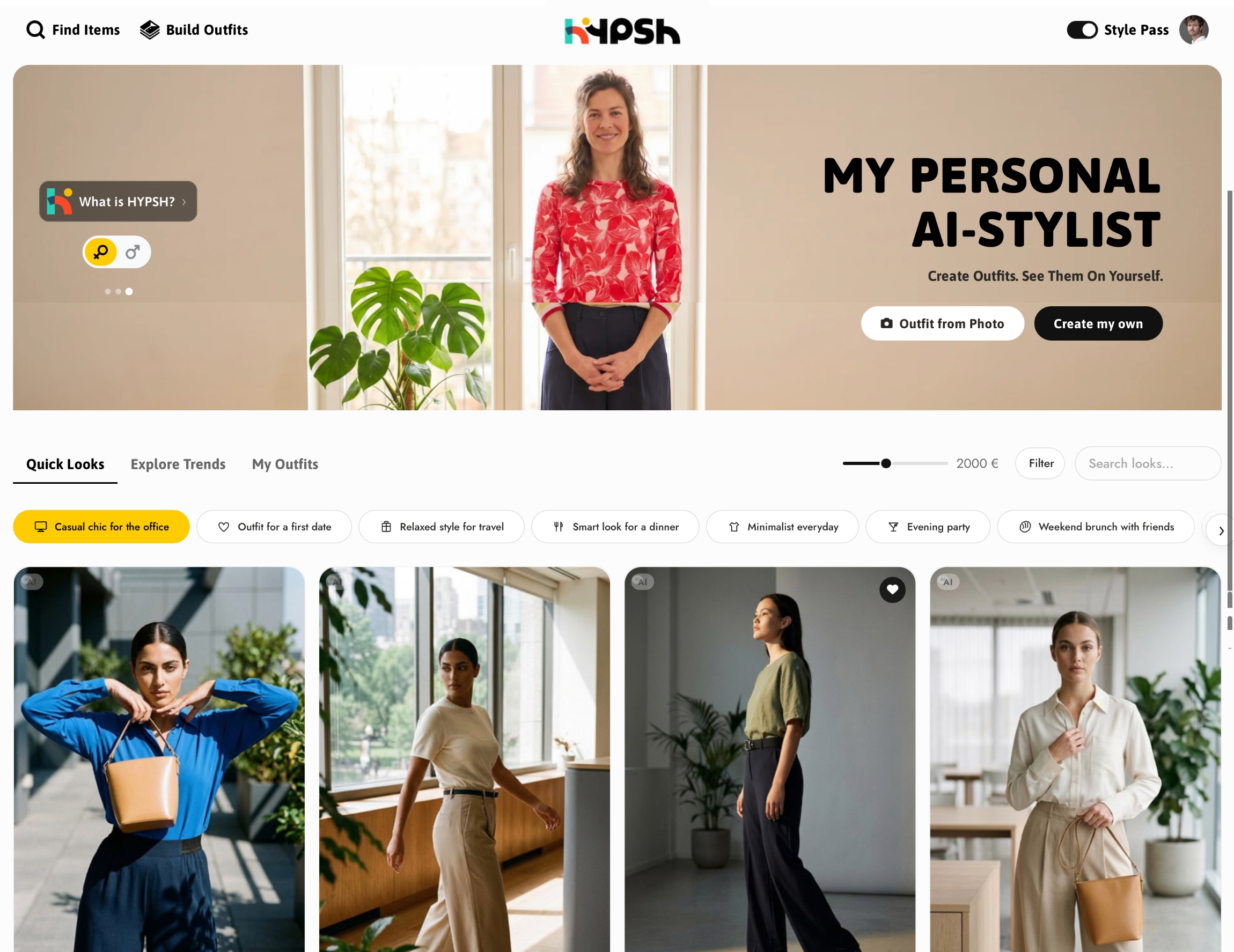 Product screenshot — discovery pageDownload
- Portrait — Benjamin DagerothDownload
- Portrait — Stephan PfobDownload


Available on request
- Vector logo (SVG), plus reversed and monochrome versions for dark backgrounds
- Brand guidelines
- One-page fact sheet (PDF)
- Product demo video
Story angles
What a human can do that an AI cannot
Everyone is debating this right now, and the most honest answer we have is also the most uncomfortable one. We call it Human Royalty, the capabilities where a good human stylist still outperforms an AI: empathy, reading a room, the ability to build a relationship. An AI knows that navy goes with camel. A person knows that today you don't want advice, you want confirmation. (And that navy + caramel is not always great.) We are building an AI that styles as well as it possibly can. But we build it with the conviction that this boundary is real.
The placebo effect of fashion
A colour system is not a law of physics, and we would be lying if we sold ours as one. The evidence under all of it is thin. And it's beside the point. The job of getting dressed is to leave the house convinced, and an outfit worn with conviction does more for the wearer than the same outfit worn with doubt. Call it the placebo effect of fashion — except that unlike most placebos, nobody has to be deceived for this one to work. A guide that gets somebody to wear a piece with conviction has done precisely what clothes are for.
The text box is an abdication
The industry's answer to every question is a search field, which asks the customer to supply exactly the expertise the retailer was supposed to provide. We built one too, like everybody. Then we read what people put into it. Jeans. Blazer. Trousers. One word, over and over, from people who had arrived wanting an outfit and left with a list. The rare soul who tried properly sent us a paragraph about sweat marks and room in the sleeve. Neither the single word nor the paragraph is a query. Both are somebody asking to be dressed.
What a machine has to know before it can dress anyone
A product feed knows a skirt is size 38, viscose, midi, black. It does not know whether the skirt is any good with the boots. Everything difficult sits in that gap.
Every model we show is generated and labelled. The retouched ones never were.
Marking synthetic models is not a stance we took — the AI Act requires it, and we comply. What is still worth arguing about is where the line falls. A generated model is obviously synthetic. The retouched one that came before it was too — just more quietly: reshaped, resurfaced, and never marked as anything at all. Fashion has been publishing altered bodies for decades without a label. Where the line should sit is a fair question, and not ours alone to answer.
Usage rights
All assets on this page are free for editorial use in coverage of hypsh. Please do not alter, recolour or reconstruct the wordmark. Product screenshots must not be presented as photographs of a physical product.
Photos of Ben and Stephan
© Mehdi Bahmet / Concept Photography Berlin